Well, hey there! I’m in the business of supplying wheat processing equipment, and there’s a burning question I often get asked: what are the differences between dry and wet wheat processing equipment? Let’s dive right in and break it down. Wheat Processing Equipment
1. The Basics of Dry and Wet Processing
First off, we need to understand what dry and wet wheat processing mean. Dry processing, as the name suggests, involves working with wheat in its relatively dry state. It’s all about cleaning, grinding, and sifting the grains to turn them into products like flour. On the flip side, wet processing starts by soaking the wheat in water. This softens the grains, making it easier to separate different components like starch, gluten, and bran.
2. Equipment for Dry Wheat Processing
Cleaning Equipment
In dry processing, the first step is to clean the wheat. We use equipment like vibrating screens and aspirators. Vibrating screens are pretty straightforward. They shake the wheat around, allowing the smaller impurities to fall through the holes in the screen. Aspirators, on the other hand, use air currents to remove lighter impurities like dust and chaff. It’s like a mini tornado for your wheat, sucking out all the unwanted stuff.
Grinding Equipment
Once the wheat is clean, it’s time to grind it. The most common piece of equipment here is the roller mill. Roller mills have a pair of large rollers that rotate in opposite directions. As the wheat passes between the rollers, it gets crushed and ground into flour. The size of the flour particles can be adjusted by changing the distance between the rollers. Another option is the hammer mill. It uses a series of hammers spinning at high speed to break the wheat into smaller pieces. Hammer mills are great for producing coarse flour or for grinding wheat that’s a bit tougher.
Sifting Equipment
After grinding, the flour needs to be sifted to separate different particle sizes and remove any remaining impurities. Sifters come in different types, but the most common is the rotary sifter. It has a series of screens inside a rotating drum. As the flour tumbles through the drum, the smaller particles pass through the screens, while the larger ones stay on top. This ensures that you get a consistent quality of flour.
3. Equipment for Wet Wheat Processing
Soaking Tanks
The first piece of equipment in wet processing is the soaking tank. This is where the wheat gets soaked in water for several hours or even days, depending on the process. The soaking softens the wheat kernels and makes it easier to separate the different components. Some soaking tanks have agitators to keep the water moving and ensure that all the wheat gets evenly soaked.
Separation Equipment
Once the wheat is soaked, it’s time to separate the starch, gluten, and bran. One of the key pieces of equipment here is the centrifuge. A centrifuge spins the soaked wheat mixture at high speed, using centrifugal force to separate the different components based on their density. The heavier starch settles at the bottom, while the lighter gluten and bran float to the top. Another important piece of equipment is the hydrocyclone. It uses a swirling water flow to separate the components. Hydrocyclones are great for removing fine particles and for concentrating the starch.
Drying Equipment
After separation, the starch and gluten need to be dried. We use equipment like flash dryers and fluidized bed dryers. Flash dryers use hot air to quickly dry the wet material as it’s blown through the dryer. Fluidized bed dryers, on the other hand, use a stream of hot air to suspend the wet material in a fluid-like state, allowing for efficient drying.
4. Key Differences in Equipment Design
Material of Construction
Dry processing equipment is often made of materials like stainless steel or carbon steel. These materials are strong and durable, and they can withstand the abrasion caused by the dry wheat grains. In wet processing, however, the equipment needs to be made of corrosion-resistant materials like stainless steel or plastic. This is because the water and chemicals used in wet processing can cause corrosion over time.
Sealing and Hygiene
Wet processing equipment requires better sealing to prevent water leakage. This is important not only for efficiency but also for hygiene reasons. In a wet processing environment, there’s a higher risk of bacterial growth, so the equipment needs to be easy to clean and sanitize. Dry processing equipment also needs to be clean, but the risk of contamination is generally lower.
Energy Consumption
Dry processing equipment tends to be more energy-efficient than wet processing equipment. This is because wet processing involves the additional steps of soaking, separation, and drying, which require more energy. For example, the drying process in wet processing can be quite energy-intensive, especially if you’re using a large-scale dryer.
5. Product Quality and Applications
Product Quality
The quality of the products produced by dry and wet processing can be quite different. Dry processing typically produces flour with a higher protein content, which is great for making bread and other baked goods. Wet processing, on the other hand, can produce high-quality starch and gluten, which are used in a wide range of industries, including food, pharmaceutical, and textile.
Applications
Dry processed products are mainly used in the food industry for making bread, pasta, cakes, and other baked goods. Wet processed products, on the other hand, have a much wider range of applications. Starch can be used as a thickener, stabilizer, or emulsifier in food products, while gluten can be used as a meat substitute or as a binder in processed foods.
6. Cost Considerations
Initial Investment
The initial investment for wet processing equipment is generally higher than for dry processing equipment. This is because wet processing equipment is more complex and requires more components, such as soaking tanks, centrifuges, and dryers. Dry processing equipment, on the other hand, is relatively simpler and less expensive.
Operating Costs
Operating costs for wet processing are also higher. This is mainly due to the energy consumption for soaking, separation, and drying, as well as the cost of water and chemicals. Dry processing has lower operating costs, as it mainly involves cleaning and grinding, which require less energy and fewer resources.
7. Making the Right Choice
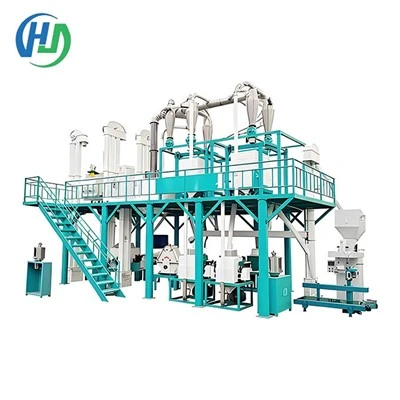
So, which type of equipment is right for you? Well, it depends on your specific needs and requirements. If you’re mainly interested in producing flour for baking, then dry processing equipment might be the way to go. It’s more cost-effective and easier to operate. However, if you’re looking to produce high-quality starch and gluten for a variety of industries, then wet processing equipment might be a better choice, despite the higher initial investment and operating costs.
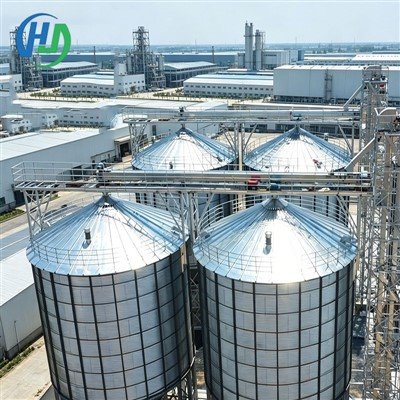
Grain Steel Silo As a wheat processing equipment supplier, I’m here to help you make the right decision. Whether you’re just starting out or looking to upgrade your existing equipment, I can provide you with the information and support you need. If you’re interested in learning more about our products or have any questions about dry or wet wheat processing equipment, don’t hesitate to get in touch. We can have a chat, discuss your needs, and find the best solution for your business.
References
- "Wheat Processing Technology" by John Doe.
- "Handbook of Cereal Science and Technology" by Jane Smith.
- "Advances in Grain Processing" published by the Food Science Institute.
Henan Huinong Machinery Co., Ltd.
Henan Huinong Machinery Co., Ltd. is one of the most professional wheat processing equipment manufacturers and suppliers in China, featured by quality products and low price. Please rest assured to buy discount wheat processing equipment from our factory. We also accept customized orders.
Address: No. 6, Northeast Corner of the Intersection of Renmin Road and Zhujiang Road, New District, Huaxian County, Henan Province
E-mail: frank.tang@huinongmachinery.com
WebSite: https://www.huinongmachinery.com/
