Hey everyone, let’s cut to the chase—magnetic chillers are all the rage right now, right? I’m a supplier of these bad boys, and I get it: everyone’s hyped about how they’re way more energy-efficient than traditional centrifugal chillers, no oil to mess with, lower maintenance, all that good stuff. But here’s the thing—we can’t be all sunshine and rainbows, even when we sell the things. Today I wanna talk about the real disadvantages of magnetic chillers, stuff that folks don’t always bring up in the marketing fluff, especially if you’re thinking about dropping a ton of cash on one for your facility. Magnetic Chiller
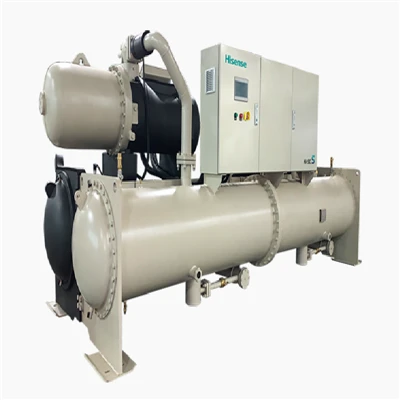
First off, let’s level set: magnetic chillers use magnetic bearings instead of oil-lubricated ones, which is their whole bread and butter. No friction, so less wear, no oil changes. But that magnetic bearing tech? It’s not cheap to build, and that high upfront cost is a huge one. I’ve had customers come to me all excited, then do a double-take when they see the price tag. Like, a 100-ton magnetic chiller can cost 20-30% more than a comparable traditional centrifugal model. Yeah, over time you save on energy and maintenance, but that payback period? It’s not overnight. If you’re a small business with a tight budget, or you just need a chiller for a temporary space, that upfront hit can be a dealbreaker. I had a client last year who ran a small manufacturing plant—they needed a chiller for a 3-year contract, and the payback was gonna be 4 years. That didn’t make sense for them, so they went with a cheaper traditional unit, and honestly? I couldn’t blame ‘em.
Next up, size and space. Wait, you’d think they’d be smaller, right? No oil reservoirs, no complex lubrication systems—so compact, yeah? Not always. A lot of magnetic chillers have that magnetic bearing assembly and variable frequency drive (VFD) tech that takes up more floor space than you’d expect, especially for higher capacity units. I’ve had customers who installed them in a chiller room that was sized for a standard centrifugal, and had to rearrange pipes, move other equipment, even knock out a small wall. That adds more cost—not just the chiller itself, but installation, retrofitting, downtime during the install. Traditional chillers have been around forever, so there are standard sizes that fit most chiller rooms. Magnetic chillers, not so much. You gotta do a lot more site prep, and if your space is tight? That’s a major headache.
Then there’s the whole reliability thing, especially when it comes to those magnetic bearings and the electronics that run ‘em. Magnetic bearings are super precise—they keep the compressor levitating with tiny sensors that adjust constantly. But if there’s a power glitch? Like a short outage, or a voltage spike? That can mess with the magnetic alignment. I’ve heard stories (and had a couple of my own) where a small power surge tripped the chiller’s bearing system, and you had to call in a tech who specializes in magnetic chillers, not just any HVAC guy. Traditional chillers with oil-lubricated bearings are way more forgiving—even a minor power blip, they just kick back on, no big deal. Magnetic chillers? If the bearing control system gets damaged, that’s a pricey fix. Replacing a bearing controller can run into thousands of dollars, and it’s not something you can get parts for locally in most cases. You gotta wait for a specialist to come out, which means downtime for your facility—time that costs you money, especially if you’re running 24/7.
Oh, and climate limits. I know a lot of people think magnetic chillers work in every condition, but that’s not true. If you’re in an area with super high ambient temperatures—like desert regions where it’s 110°F (43°C) or more outside—magnetic chillers can struggle a bit. Their efficiency drops off when the ambient temp is way above their design range, more so than traditional centrifugal chillers. Why? Because magnetic chillers rely on the refrigerant’s pressure, and high outside temps make that pressure higher, which means the magnetic bearings have to work harder to keep the compressor levitating. That higher workload can actually negate some of the energy savings you were counting on. I had a client in Arizona last year who thought a magnetic chiller would cut their energy bills, but in the summer when it hit 115°F, the efficiency was only 5% better than their old unit, not the 30% they were promised. That’s a big letdown, and it’s something to check before you buy.
Maintenance, wait—we said it’s lower maintenance, but it’s not no maintenance. The maintenance that magnetic chillers do need is different, and a lot more specialized. Like, you can’t just have your regular HVAC tech come service it. They need to be trained on magnetic bearing systems, the VFDs, the refrigerant charge (wait, refrigerant leaks are another thing—magnetic chillers often use HFCs or low-GWP refrigerants that are more expensive to refill, and leak detection is trickier because there’s no oil to track leaks, which is how you find leaks in traditional chillers). Also, those magnetic bearings need regular calibrations. Every few years, you gotta have a tech come out and adjust the sensor alignment, check the bearing health, replace any worn parts. For traditional chillers, you just change the oil every season, check the filters, done. For magnetic, it’s more specialized, more frequent (or at least, more involved) maintenance, and higher service costs.
Oh, and part availability. This is a big one, especially if you’re not a big facility. Magnetic chiller tech is still relatively new, right? Most manufacturers don’t stock a ton of replacement parts locally. If your chiller’s compressor needs a bearing, or the VFD goes out, you might have to wait a week or two for the part to ship from the factory. Traditional chillers have been around for decades—parts are everywhere, any HVAC supply store has ‘em. I had a client in Canada last winter who’s magnetic chiller’s refrigerant line got damaged, and they had to wait 10 days for a replacement line. Their old chiller would’ve had the part in stock locally, fixed in a day. That downtime in cold weather? Cost them a ton in production losses.
Wait, also, part load efficiency. I know, I just talked about how they’re efficient, but that’s at full load. If your facility only needs partial cooling most of the time—like, if you run shifts where you need 50% capacity, or you have varying cooling loads throughout the day—magnetic chillers’ efficiency drops when they’re not at full tilt. Their VFDs are good, but not perfect at low loads, whereas traditional centrifugal chillers can actually be more efficient at partial loads if they’re designed right. I had a customer who ran a small warehouse that only needed cooling for 8 hours a day, at like 40% capacity. Their magnetic chiller was only 15% more efficient than their old unit, not the 25% they were told. That payback period stretched way longer than we projected.
And let’s not forget training. If you’re a facility manager, your team has to learn how to operate a magnetic chiller. The control panels are way more complex—touchscreens, a million settings, alerts for bearing health, refrigerant levels, power quality. Your regular operators might not be used to that. You gotta send them for training, which costs time and money. Traditional chillers have simple controls—turn it on, check the pressure, done. No fancy training needed.
Wait, but hold on—before you think I’m just bashing magnetic chillers, let’s get this straight. I sell these things, I’m not here to talk you out of ‘em. But if you’re considering one, you need to go into it with your eyes open. The benefits are real—no oil, lower energy bills long-term, less major wear—but they’re not for everyone. So who should you get a magnetic chiller for? Big facilities, 24/7 operation, consistent cooling loads, space for that bigger unit, a budget that can handle the upfront cost and specialized maintenance. But if you’re a small business, tight space, variable loads, or in a super hot climate, you might wanna think twice.
Here’s the thing as a supplier: I’d rather be honest with you up front than sell you a chiller that doesn’t work for your needs. I’ve had customers who bought magnetic chillers and loved ‘em, saved thousands on energy. I’ve had others who regretted it because of the disadvantages I mentioned today. That’s why I’m laying it all out.
If you’re in the market for a chiller, and you wanna talk through whether a magnetic unit makes sense for your facility, hit me up. We can go over your cooling needs, your space, your budget, and I’ll give you the straight scoop—no sales fluff, no pushing something that’s not right for you. Just real talk, since that’s what we do here.
Air Handling Unit References:
- ASHRAE. (2022). HVAC Systems and Equipment Handbook: Chillers. American Society of Heating, Refrigerating and Air-Conditioning Engineers.
- Magnetic Bearing Technology for Rotating Machinery. (2021). International Organization for Standardization.
- Energy Efficiency Comparison of Centrifugal Chiller Technologies. (2023). U.S. Department of Energy, Office of Energy Efficiency & Renewable Energy.
- Site Requirements for Large Commercial Chillers. (2022). Air-Conditioning, Heating, and Refrigeration Institute.
Hangzhou Dayu HVAC Engineering Co., Ltd.
As one of the most professional magnetic chiller manufacturers and suppliers in China, we have world-leading production equipment and strong manufacturing capabilities. If you’re going to buy customized magnetic chiller made in China, welcome to get quotation from our factory. For price consultation, contact us.
Address: Room 1004, Building 1, Xicheng Business Tower, Xihu District, Hangzhou City, Zhejiang Province, China
E-mail: info@hi-hvac.com
WebSite: https://www.hi-hvac.com/
