When I first started working as a supplier specializing in ASTM IPS Inch Butt Fusion Fittings, I heard a question at least once a week—sometimes more, from plumbers, construction foremen, and facility maintenance managers: “How long do these things actually last?” It’s a fair question. No one wants to invest in a piping system that will need replacing in five years, especially for commercial buildings, industrial facilities, or municipal water lines that are supposed to stand the test of time. Over the past dozen years, I’ve sold thousands of these fittings, helped troubleshoot everything from poor installation to unexpected environmental stressors, and worked directly with material scientists to confirm what actually makes these fittings hold up. Today, I want to break down the real lifespan of ASTM IPS Inch Butt Fusion Fittings—not the vague, marketing-driven numbers, but the data and real-world experience that anyone in the industry can trust. ASTM IPS Inch Butt Fusion Fittings
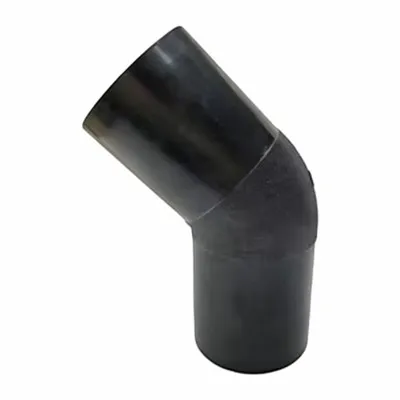
First, let’s get one thing straight: “how long something lasts” isn’t a single number. It depends on the material it’s made from, how it’s installed, what it’s carrying, and the conditions it’s exposed to. For ASTM IPS Inch Butt Fusion Fittings, the core material here is almost always polyethylene (PE)—high-density polyethylene (HDPE), to be exact. The ASTM standard for these fittings specifically requires HDPE that meets ASTM D3350 specifications, which means it’s formulated to resist corrosion, impact, and chemical degradation far better than generic plastic pipes or fittings you might find at a big-box hardware store. Generic plastic can get brittle in sunlight, crack if it’s hit, or break down when exposed to even mild chemicals, but ASTM-grade HDPE is engineered for long-term performance. That’s a critical starting point because a lot of people confuse “plastic fittings” with these specific, tested ones.
From a material science perspective, HDPE has a proven track record. The American Water Works Association (AWWA) has been studying HDPE piping and fittings for decades, and their data shows that properly installed HDPE systems have a minimum service life of 50 years under ideal conditions. But wait—ASTM IPS Inch Butt Fusion Fittings aren’t just straight pipe, they’re elbows, tees, reducers, caps, and flanges that are fused to the pipe, not glued or threaded. That fusion joint is one of the most important factors in their longevity. Poor fusion is the number one reason these fittings fail prematurely, not the material itself. I’ve seen a customer install a set of fittings in a small irrigation line, skip the mandatory pressure test after fusion, and three years later, a joint split because there wasn’t enough heat or pressure during the fusion process. On the flip side, I’ve worked with a municipal water department that installed our ASTM IPS 6-inch tees back in 1998 for a water main extension, and we inspected them last year—they were still holding pressure perfectly, no signs of degradation, even after 25 years underground in compacted soil with minor pH fluctuations.
Let’s talk about the conditions that shorten (or extend) that lifespan, because that’s where most people get confused. If a fitting is installed in a buried water line, with neutral pH water (between 6.5 and 8.5, which is standard for most municipal and well water), under consistent pressure that’s within the ASTM IPS rated pressure class (like 100 psi or 160 psi, common for these fittings), and away from sharp rocks or construction activity, it can easily hit 50 to 70 years of service. But if you’re using these fittings for applications they weren’t designed for—like transporting highly corrosive chemicals, or installing them above ground in direct sunlight without any UV stabilization—you’ll see a much shorter life. Generic HDPE breaks down in UV light in about five to ten years, but ASTM D3350 requires UV stabilization for fittings that might be exposed to the elements, so that changes things. Even then, if they’re not covered or painted, above-ground fittings will degrade faster than buried ones, maybe 20 to 30 years instead of 50.
Another big factor is pressure cycling. For applications like municipal water systems that have consistent, steady pressure, fittings hold up great. But if you’re working with a system that has frequent pressure spikes—like a fire sprinkler system that cycles on and off multiple times a day, or a industrial line with surges from pumps—those cycles can cause fatigue over time. I’ve seen a set of ASTM IPS 4-inch tees in a fire system that failed after 12 years, not because of material failure, but because the pressure cycling wore at the fusion joint a tiny bit each time, until it leaked. That’s not a flaw in the fitting; it’s about matching the fitting to the application’s pressure cycle rate, which is something we as suppliers always talk to customers about. We don’t just sell them a fitting and walk away—we ask about their system’s pressure, the fluid being transported, and the installation environment to recommend the right grade of ASTM IPS fitting for their specific needs.
I also want to address a common misconception: butt fusion itself is a joining method that’s one of the strongest parts of why these fittings last. When you butt fuse two pieces of HDPE, you’re not just gluing them together—you’re melting the ends of the pipe and fitting, pressing them together under controlled heat and pressure, so they actually become a single, homogeneous piece. There’s no seam to separate, no threading that can strip, no glue that can fail. A poorly done fusion is avoidable, but when done correctly, the joint is stronger than the pipe or fitting itself. That’s why so many municipal and industrial projects specify ASTM IPS Inch Butt Fusion Fittings—because the fusion joint eliminates the weakest point that would cause a system to fail early. I’ve had customers come to us after a failed system that used threaded fittings, saying they wish they’d used butt fusion instead; threaded joints corrode from the inside, threads strip over time, and they’re far more likely to leak than a properly fused joint.
What about real-world failure cases I’ve seen in my years as a supplier? Let’s be honest, not every fitting lasts 50 years. I once worked with a construction company that installed our ASTM IPS 8-inch elbows for a underground storm drain line. They did everything right—proper fusion, pressure test, buried 4 feet deep with gravel backfill. But a year later, a utility company dug nearby and nicked the line, and the elbow cracked at the point of the nick. That wasn’t a failure of the fitting or the installation; it was external damage from a third party. Another case: a customer used a set of our ASTM IPS 2-inch tees to transport a mild acidic agricultural runoff (pH 5.2) for a small farm. They installed them 10 years ago, and now they’re showing minor surface cracking. That’s not a flaw in the ASTM standard—ASTM IPS fittings are designed for neutral pH water, not consistent acidic fluids, so we should have recommended a more chemical-resistant grade for that application. Those are the exceptions, though. The vast majority of the fittings we sell go 20, 30, even 40 years without issue when installed correctly for their intended use.
Let’s also talk about how standards play into this. The ASTM designation isn’t just a random set of letters and numbers—it’s a strict set of material and performance requirements. Every ASTM IPS Inch Butt Fusion Fitting we supply is tested to meet requirements for tensile strength, impact resistance, environmental stress crack resistance (ESCR), and long-term hydrostatic strength (LTHS). LTHS is a big one—it measures how much pressure a fitting can withstand over 50 years at 23°C (73°F). The minimum LTHS for ASTM D3350 HDPE is 10 MPa, which means a properly rated fitting will hold pressure indefinitely as long as it’s not abused or exposed to extreme conditions. That’s a scientific data point, not a guess, so when a customer asks “how long will this last?” I can show them the test results, not just a sales pitch.
I also want to emphasize that maintenance plays a role, even for these durable fittings. Unlike metal pipes that need to be checked for corrosion, ASTM IPS Inch Butt Fusion Fittings are low-maintenance, but a quick visual inspection every few years goes a long way. If you notice surface cracking, discoloration, or leakage at a joint, it’s usually a sign of either installation issues, external damage, or exposure to conditions the fitting wasn’t designed for. Most of the time, catching that early means you can repair a small section before it becomes a full system failure. I’ve helped dozens of customers troubleshoot minor issues, and in almost every case, it was a simple fix—like replacing a single tee, not the entire piping system.
Now, let’s get back to the original question, put it all together. The short answer: for properly installed ASTM IPS Inch Butt Fusion Fittings, used for their intended purpose (transporting water, gases, or mild chemicals, within their rated pressure class, buried or above ground with proper UV protection), the service life is between 50 and 70 years. That’s based on material science data, real-world installations, and the thousands of fittings I’ve supplied over the years. The longer answer is that it can be shorter—maybe 20 to 30 years—if they’re misapplied, poorly installed, exposed to extreme chemicals or UV light without protection, or damaged externally. But when you choose the right fitting for your application, work with a reputable supplier who understands ASTM standards, and have them installed by a certified butt fusion technician, you’re looking at a system that will last for decades, with minimal downtime or replacement costs.
I’ve been in this business long enough to know that price can be a factor, but cutting corners on generic fittings to save a few dollars almost always leads to higher costs down the line. A generic plastic fitting might cost 20% less upfront, but it might fail in 10 years, compared to 50 years for an ASTM IPS fitting. That means more labor costs, more downtime for your system, and more disruption to your operations. For municipal water departments, that means digging up streets to replace lines; for farms, that means downtime for irrigation; for industrial facilities, that means lost production. The initial investment in high-quality, ASTM-grade fittings pays off in the long run in reliability and lower maintenance costs.

As a supplier, my goal isn’t just to sell you a box of fittings—it’s to make sure your system lasts as long as it’s supposed to, and that you don’t run into unexpected failures down the line. If you’re planning a new project, replacing an old system, or just have questions about which ASTM IPS Inch Butt Fusion Fittings are right for your application, I’m here to help. We can go over your project requirements, review the testing data for the fittings, and make sure you get the products that will stand the test of time.
PPR Fittings References
ASTM International. (Current). Standard Specification for Polyethylene (PE) Plastic Pipe (SDR-PR) Based on Controlled Outside Diameter (ASTM D3350).
American Water Works Association. (Current). HDPE Piping for Water and Wastewater Applications (AWWA M55).
Plastic Pipe & Fittings Association. (Current). Long-Term Performance of Polyethylene Piping Systems.
Qingdao Polyfusion Machinery Co., Ltd.
As one of the most professional ASTM IPS inch butt fusion fittings manufacturers and suppliers in China, we have world-leading production equipment and strong manufacturing capabilities. Please feel free to buy bulk high quality ASTM IPS inch butt fusion fittings from our factory.
Address: Chengyang Industry Zone, Chengyang, Qingdao, Shandong, China
E-mail: export01@qdpolyfusion.com
WebSite: https://www.polyfusionfittings.com/
