In the realm of water treatment and separation processes, membrane filtration equipment stands as a cornerstone technology. Among the various filtration methods, cross – flow and dead – end filtration are two primary techniques, each with its unique characteristics, advantages, and limitations. As a supplier of membrane filtration equipment, I’ve witnessed firsthand the diverse needs of our clients and how the choice between these two filtration types can significantly impact the efficiency and effectiveness of their operations. Membrane Filtration Equipment

Dead – End Filtration: The Basics
Dead – end filtration, also known as direct filtration, is a relatively straightforward process. In this method, the feed solution is forced through the membrane perpendicular to its surface. All the fluid that passes through the membrane becomes the filtrate, while the particles and contaminants larger than the membrane pores are retained on the membrane surface, gradually forming a filter cake.
One of the most significant advantages of dead – end filtration is its simplicity. The equipment required for this process is relatively uncomplicated and easy to operate. It is also highly efficient for applications where the feed solution has a low concentration of suspended solids. For example, in the laboratory setting, dead – end filtration is commonly used for the sterilization of small volumes of liquids. It can quickly remove bacteria and other microorganisms, providing a clean filtrate.
However, dead – end filtration also has its drawbacks. As the filter cake builds up on the membrane surface, it creates a resistance to the flow of the feed solution. This leads to a decrease in the filtration rate over time, a phenomenon known as fouling. Eventually, the membrane may become clogged, requiring frequent cleaning or replacement. This can increase the operating costs and downtime of the filtration system, making it less suitable for continuous or large – scale operations with high – solids feed.
Cross – Flow Filtration: A Different Approach
Cross – flow filtration takes a different route. In this process, the feed solution flows parallel to the membrane surface. A portion of the feed passes through the membrane as the filtrate, while the remaining solution, containing the retained particles, continues to flow across the membrane and is typically recycled back to the feed tank.
The key advantage of cross – flow filtration is its ability to mitigate fouling. The continuous flow of the feed solution across the membrane surface helps to sweep away the retained particles, preventing the formation of a thick filter cake. This allows for a more consistent filtration rate over time and extends the lifespan of the membrane. As a result, cross – flow filtration is well – suited for applications with high – solids feed or those that require continuous operation, such as in the food and beverage industry, where large volumes of liquids need to be processed.
Another benefit of cross – flow filtration is its flexibility. It can be easily adjusted to handle a wide range of feed concentrations and particle sizes. By controlling the flow rate and pressure of the feed solution, operators can optimize the filtration process for different applications.
However, cross – flow filtration also has its challenges. The equipment for cross – flow filtration is generally more complex and expensive than that of dead – end filtration. It requires additional pumps and piping to maintain the cross – flow of the feed solution, which increases the initial investment and operating costs. Additionally, the energy consumption of cross – flow filtration systems is typically higher due to the continuous circulation of the feed solution.
Comparing Performance Metrics
When comparing cross – flow and dead – end filtration, several performance metrics are crucial.
Filtration Rate
As mentioned earlier, dead – end filtration starts with a relatively high filtration rate but decreases rapidly as the filter cake accumulates. In contrast, cross – flow filtration maintains a more stable filtration rate over time, thanks to its anti – fouling mechanism. For applications where a constant flow of filtrate is required, such as in industrial production lines, cross – flow filtration is often the better choice.
Rejection Rate
The rejection rate refers to the ability of the membrane to retain particles and contaminants. Both dead – end and cross – flow filtration can achieve high rejection rates, depending on the membrane pore size and the nature of the feed solution. However, in some cases, the filter cake formed in dead – end filtration can enhance the rejection of smaller particles, acting as an additional filtration layer. On the other hand, cross – flow filtration can provide more consistent rejection rates over a longer period due to its reduced fouling.
Membrane Lifespan
The lifespan of the membrane is a critical factor in terms of cost – effectiveness. Dead – end filtration membranes are more prone to fouling, which can significantly shorten their lifespan. Frequent cleaning and replacement of the membrane can add up to substantial costs. Cross – flow filtration, with its anti – fouling properties, generally extends the membrane lifespan, reducing the overall cost of ownership.
Application – Specific Considerations
The choice between cross – flow and dead – end filtration also depends on the specific application.
Laboratory and Small – Scale Applications
In laboratory settings or for small – scale operations where simplicity and low cost are key, dead – end filtration is often the preferred method. It is suitable for filtering small volumes of liquids with low – solids content, such as in sample preparation or the purification of reagents.
Industrial and Large – Scale Applications
For industrial applications that involve large volumes of feed solution with high – solids content, cross – flow filtration is the go – to option. It is widely used in industries such as pharmaceuticals, biotechnology, and food and beverage, where continuous operation and high product quality are essential.
Water Treatment
In water treatment, both methods have their place. Dead – end filtration can be used for pre – treatment of water with relatively low turbidity, while cross – flow filtration is more suitable for the treatment of wastewater or surface water with high levels of suspended solids.
Making the Right Choice
As a supplier of membrane filtration equipment, I understand that choosing between cross – flow and dead – end filtration is not always straightforward. It requires a careful assessment of the feed solution characteristics, the desired filtration performance, and the budget constraints.
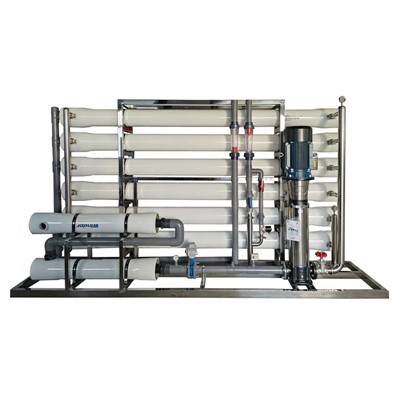
We work closely with our clients to understand their specific needs and provide customized solutions. Our team of experts can conduct in – depth analyses of the feed solution, recommend the most appropriate membrane type and filtration method, and design a filtration system that meets their requirements.
SWRO & BWRO Equipment If you are in the process of selecting a membrane filtration system for your application, I encourage you to reach out to us. Our experienced sales and engineering team are ready to provide you with detailed information, technical support, and cost – effective solutions. Whether you need a small – scale laboratory setup or a large – scale industrial filtration system, we have the expertise and the products to meet your needs. Contact us today to start a conversation about your filtration requirements and explore how our membrane filtration equipment can help you achieve your goals.
References
- Cheryan, M. (1998). Ultrafiltration and Microfiltration Handbook. Technomic Publishing.
- Porter, M. C. (1990). Handbook of Industrial Membrane Technology. Noyes Publications.
- Strathmann, H. (2010). Synthetic Membranes: Science, Engineering and Applications. Springer.
Shandong Yanuo Environmental Protection Equipment Co., Ltd.
We’re well-known as one of the leading membrane filtration equipment manufacturers and suppliers in China, featured by quality products and good price. Please rest assured to buy bulk membrane filtration equipment made in China here from our factory. Customized orders are welcome.
Address: North Side of the Road, 1,000 Meters West of the Intersection of Fenghuangshan West Road and Provincial Highway S102, Wangfu Subdistrict, Qingzhou City, Weifang City, Shandong Province.
E-mail: ynhb.499973983@gmail.com
WebSite: https://www.zkyaruo.com/
