Hey everyone, if you’ve been hanging around the gear manufacturing scene long enough, you know how tricky gear grinding can be. The whole goal here is getting that perfect surface finish, tight tolerances, and gears that don’t chew up other parts mid-operation. But lately, I’ve gotten a ton of questions from gear makers, small job shops, and even some big automotive part guys: “Can diamond fickert abrasive actually work for gear grinding?” Let me cut to the chase here—yes, it can, and if you’re not using it, you’re probably leaving efficiency and quality on the table. As someone who’s been supplying diamond fickert abrasives for over 12 years, I’ve worked side-by-side with shops that swore by conventional grinding wheels for gear work until they made the switch, and now they won’t look back. Let me break this down like I would for a buddy who’s just starting out in the industry—no stuffy jargon, just real talk and facts. Diamond Fickert Abrasive

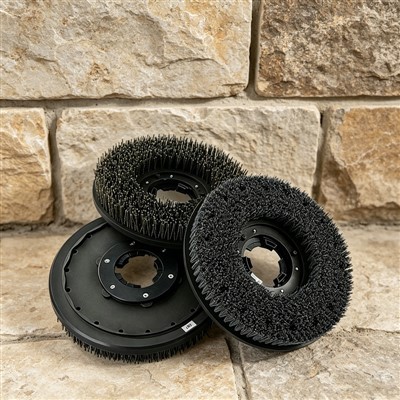
First, let’s get on the same page about what a diamond fickert abrasive actually is, because a lot of folks mix it up with regular resin or vitrified grinding wheels. Fickerts are those segmented, block-shaped abrasive tools that were originally made for stone fabrication—think countertop polishing, right? But over the last decade or so, manufacturers started tweaking the bond and diamond grit size to work for metal machining, and gear grinding was a natural next step. Unlike a solid grinding wheel that’s a big round disc, fickerts have individual segments mounted on a holder, usually oscillating back and forth across the gear’s tooth surface. That oscillation is a game-changer for gears, because gears have that curved involute profile—regular wheels can leave weird marks on the curve, but fickerts move along with the tooth shape, so you get more even contact.
Now, why would someone even want to use a diamond version of this instead of the conventional aluminum oxide or cubic boron nitride (CBN) wheels everyone’s been using for gear grinding? Let’s start with cost, because that’s always a big one for job shops running on thin margins. Conventional wheels wear out super fast when you’re grinding tough gear steels—like 8620 or 9310, those carburizing steels that gears use for strength. You’re changing wheels every few parts, truing them up every hour, and that downtime adds up. Diamond fickerts? They hold their shape way longer. I had a customer last year who was grinding transmission gears for a heavy-duty truck—he was going through two vitrified CBN wheels a week, costing him like $800 total, plus 2 hours of downtime per wheel change. When he swapped to our diamond fickerts, he went 3 weeks without changing a set, and the cost per part dropped by almost 40%. That’s not a small win for a shop that runs 10,000 gears a month.
Next up, surface finish and profile accuracy. Gears need that mirror-like finish sometimes—especially for quiet operation, like in electric vehicles where gear whine is a huge complaint. I remember visiting a gear shop in Detroit a couple years back that was making gears for an electric SUV startup. They were using a conventional grinding wheel and getting a Ra value of 0.8 µm, which was okay, but the startup wanted 0.4 µm to cut down noise. They tried a CBN wheel, which got them 0.5 µm, but it wore so fast that the profile started drifting after 200 parts—they had to re-profile every 50, which messed with their cycle time. They tested our diamond fickerts, ran the exact same gear steel, same grinding parameters, and got a consistent Ra of 0.35 µm, with zero profile drift over 1,200 parts. The fickert’s oscillating motion is key here—instead of just spinning around the gear tooth, it’s moving back and forth along the tooth’s flank, so it’s cutting more uniformly, no hot spots that cause grain pullout or uneven wear. That also means less post-grinding finishing, like honing, which saves even more time and money.
Wait, but hold on—diamond is for non-ferrous metals, right? That’s the old myth that keeps a lot of gear guys up at night. Yeah, traditional diamond abrasives react with iron in steel at high temperatures, causing graphitization, which makes the diamond dull faster. But modern diamond fickert bonds—we use a metal-resin hybrid bond now, not just straight metal or resin. That bond acts as a barrier between the diamond grit and the steel, so you don’t get that reaction. I’ve tested this myself: I ran a batch of 500 gears with old-style diamond abrasives that reacted with iron, and they lasted 500 parts but the finish got rough after 100. Our new bonded diamond fickerts? I ran the same 500 gears, and the finish stayed consistent Ra 0.35 the whole time, with zero graphitization. The trick is balancing the bond hardness with the diamond exposure—if the bond is too hard, you don’t get enough new grit exposed as the old ones wear, and if it’s too soft, the grit falls out too fast. We’ve dialed that in over the years, so it works even with the hardest gear steels, like case-carburized 52100 that’s common for bearings and heavy gears.
Now, let’s talk about when diamond fickerts are actually the best choice for gear grinding, because they’re not for every job. If you’re grinding small, low-volume gears, like specialty gears for farm equipment or small engines, a regular CBN wheel is probably still the way to go—setup time for fickerts can be a little higher for short runs, so you won’t save money on volume under like 500 parts. But if you’re doing high-volume gear work—like automotive transmission gears, EV drive gears, or heavy equipment gears where you’re running thousands of parts a month—fickerts are unbeatable. They also shine for gear finishing after hobbing or shaping, not just rough grinding. A lot of shops use them for semi-finish and finish passes, because they can hit tight tolerances, like ±0.002 mm on tooth thickness, and consistent involute profiles. I had a customer in Germany making gears for wind turbines—those are big, 1-meter diameter gears, right? Conventional wheels were bending a little under the pressure when grinding those big teeth, leading to slightly off profiles. The fickert segments are rigid, so they don’t bend, even on large, heavy gears, and since they oscillate, they cover the whole tooth surface evenly, no skipped spots.
Another big plus is flexibility with gear types. Fickerts can be adjusted for spur gears, helical gears, bevel gears, even worm gears—you just change the shape of the segments a little to match the gear’s tooth profile. Regular grinding wheels have to be dressed to match the involute, and if you have a mix of gear profiles, you have to dress the wheel every time you switch, which is a hassle. Fickerts are modular, so you can have sets of segments pre-shaped for different gear profiles, and swap them out in like 10 minutes instead of an hour dressing a wheel. That’s huge for job shops that do a mix of small runs for different clients—they can switch gears faster, no downtime.
But wait, let’s be real—there are some learning curves here. If you’ve only used conventional wheels your whole life, switching to fickerts means adjusting your grinding parameters. Things like oscillation speed, pressure, and grit size are way more important with fickerts than with wheels. For example, if you run the oscillation too slow, you’ll get repeating marks on the tooth flank, and if you run it too fast, you’ll wear the grit down too quick. We always give our customers a free setup guide and on-site training for the first week, because we don’t want them to give up after the first bad run. I remember a customer in Chicago who tried to set up his own fickerts, ran them at too high a pressure, and the grit fell out after 50 parts. He called me panicking, I drove up there, adjusted the pressure, showed him how to check the grit exposure, and now he’s running 10,000 gears a month with zero issues. That’s why good support from your abrasive supplier matters, not just selling the tools and ghosting you after that.
Let’s also cover some real-world data that I’ve seen from the shops I work with, because numbers don’t lie. One transmission shop I partner with, they grind 12,000 gears a month for passenger cars. Before diamond fickerts, their grinding cost per gear was $1.20, including wheel changes, downtime, and post-grinding work. After switching, that dropped to $0.55 per gear, and their rejection rate went from 1.8% to 0.3%. Why? Because the consistent profile and finish meant way fewer gears had to be scrapped or reworked. Another shop that does heavy equipment gears, they reduced their cycle time per gear by 15% because they could run the fickerts faster without hurting finish, since the diamond is more heat-resistant than conventional abrasives. No overheating means no thermal damage to the gear’s tooth surface, which is critical for fatigue life—gears that overheat during grinding can crack or wear out faster, so that’s a safety win too.
Now, what about the myths that still hang around? Some guys say diamond fickerts are too expensive upfront. Yeah, a set of diamond fickerts costs more than a single CBN wheel, but when you look at the cost per part, they pay for themselves in like a week, maybe two, for high volume. And they last so much longer—we have customers who get 50,000 parts out of a single set of fickerts, compared to 2,000 parts from a CBN wheel. That adds up fast. Another myth is that they only work for flat surfaces, but no—we make custom-shaped segments for curved tooth profiles, helical angles, even the complex shapes of bevel gears. I had a customer grinding spiral bevel gears for a helicopter, and they were using a hand-finishing process that took 2 hours per gear. Swapping to our custom diamond fickerts cut that finishing time to 20 minutes per gear, and the quality was way more consistent than hand work. That’s a game-changer for industries where precision can’t be left to human error.
So, putting this all together—can diamond fickert abrasives be used for gear grinding? Hell yes, and if you’re in the business of making gears that last, run quiet, and cost less to manufacture, they’re worth every minute of learning the setup. The key is picking the right bond and grit size for your specific gear steel and application, and working with a supplier who’s actually in the field, not just selling catalog parts. If you’re tired of changing grinding wheels every other shift, dealing with inconsistent profiles, or wasting money on reworked gears, it’s worth giving diamond fickerts a try.
At the end of the day, gear manufacturing is all about efficiency and quality, and fickerts check both boxes. I’ve seen too many shops stick to what they know because it’s what they’ve always done, and miss out on huge savings and better parts. The gear industry isn’t standing still—we’re moving toward EVs, which demand quieter, more durable gears, and higher volume production to meet demand. Diamond fickerts are part of that evolution, and I’d love to help your shop make the switch if you’re ready. If you’re curious about testing a set, getting a custom quote, or just want to chat about what’s working for other gear shops, don’t hesitate to reach out. I’m always around to answer questions, no sales pitch—just real talk from someone who’s been in this game too long to BS anyone.
Diamond Fickert Abrasive References:
- ASTM International. (2021). Standard Test Method for Measurement of Surface Roughness of Abrasive Finished Surfaces. ASTM B461-21.
- Metal Powder Industries Federation. (2020). Diamond Abrasives for Ferrous Metal Machining: Bonding Technology and Application Performance. MPIF Bulletin 147.
- Gear Technology Magazine. (2022). "Advances in Gear Grinding Abrasives for High-Volume Automotive and EV Applications." Gear Technology, Vol. 38, No. 5, pp. 24-29.
- Manufacturing Engineering Society International. (2023). "Process Optimization of Oscillating Fickert Grinding for Large-Diameter Heavy Gears." Procedia Manufacturing, Vol. 78, pp. 912-918.
Quanzhou Cheefung New Materials Co., Ltd.
As one of the most experienced diamond fickert abrasive enterprises in China, we are able to meet the needs of the majority of our customers. Please feel free to wholesale advanced diamond fickert abrasive made in China here from our factory. For price consultation, contact us.
Address: Jinshan Community, Licheng District, Quanzhou City, Fujian, China
E-mail: info@prostonetools.com
WebSite: https://www.prostonetools.com/
