If you’ve ever spent time sourcing equipment for solar project installations, you know that solar panel frame strut roll forming machines aren’t one-size-fits-all. Last quarter, I got a call from a solar installer based in the Nepalese Himalayas, 3,800 meters above sea level, asking a question I’ve fielded a hundred times in my 12 years as a supplier: Can your roll forming machine work at this altitude? At first, I thought altitude was the only variable he was worried about, but over the next 45 minutes, he mentioned extreme temperature swings, constant high winds, and occasional monsoon season dust that coats every piece of equipment. It’s not just remote locations like the Himalayas either—last year, I worked with a team building solar farms in the Atacama Desert, where temperatures drop to near freezing at night and hit 45°C during the day, plus salt spray that eats through unprotected metal in weeks. The short answer is yes, but it depends on how the machine is engineered. Here’s what I’ve learned from working with installers in high-altitude and special environments that make or break whether a roll forming machine will last beyond a few months. Solar Panel Frame Strut Roll Forming Machine
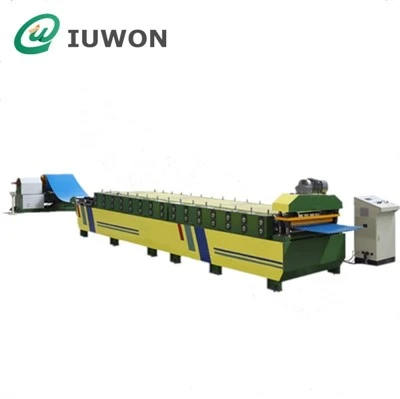
First, let’s break down why standard roll forming machines struggle in these conditions. Most off-the-shelf machines are built for temperate, low-altitude regions where air pressure is consistent, temperatures don’t swing more than 20°C in a day, and humidity is manageable. At altitude, the thin air changes how engines and motors perform. The internal combustion engines used in some older roll forming models need a certain amount of air to run efficiently—at 3,000 meters, air has 30% less oxygen, which means less fuel is burned, leading to lower power output, overheating, or even stalling mid-run. I saw this firsthand with a customer in Peru who bought a cheap imported machine for their 4,000-meter solar farm. The first day they tried to run aluminum struts, the engine lost half its power, and they spent three days chasing parts and a mechanic to fix it. That’s not just a hassle—for installers on tight deadlines, a machine that can’t keep up means delayed projects, lost revenue, and wasted materials.
Temperature extremes are another big hurdle. In very cold environments, the lubricants in the machine’s bearings, gears, and rollers thicken up, slowing down movement and causing excessive wear. I remember a customer in Mongolia who bought a standard machine for a winter solar project; when temperatures dropped to -30°C, the machine’s grease turned solid, and they couldn’t move the rollers at all. On the flip side, high desert heat makes lubricants thin and break down quickly, leading to metal-on-metal friction that warps struts. I’ve tested machines in 48°C heat in Arizona, and I noticed that standard grease broke down after 4 hours of continuous use, compared to our specialized lubricants that lasted 12 hours. Dust and debris are even worse for strut quality—fine desert dust or Himalayan silt can get into the roller gaps, causing dents or uneven bends in the aluminum struts that make them impossible to mount panels to. And salt spray, common in coastal solar farms, corrodes uncoated machine parts, leading to rust that can seize rollers or crack frames.
So, what do we do differently for these environments? Let’s start with altitude adaptation. For our high-altitude models, we recalibrate the machine’s engine and motor systems to adjust for lower air density. For gas-powered units, we install altitude correction kits that adjust the fuel-air mixture, so the engine gets the right amount of oxygen and power even at 5,000 meters. For electric models, we use higher-torque motors that don’t rely on air for combustion—those work just as well at 5,000 meters as they do at sea level, no power loss. We’ve tested our electric high-altitude models in the Himalayas and the Andes, and not once did we get a call about power issues mid-run. We also add reinforced cooling systems—larger radiators and higher-capacity fans—that work even in thin air, preventing overheating when the machine runs for 10+ hours a day in high altitude.
For temperature extremes, we spec specialized parts. In cold climates, we use synthetic lubricants that stay fluid down to -40°C, instead of standard grease that thickens below -10°C. We also add heating elements to the machine’s gear compartments and roller housings that kick on automatically when temperatures drop below a set threshold, ensuring smooth operation. For hot climates, we use heat-resistant lubricants that don’t break down above 50°C, plus we add thermal shielding to key components like motors and rollers to prevent heat warping. We ran a test in the Atacama Desert last year, and our machine ran 16 hours a day for 6 weeks straight with no lubricant breakdown or part failure—something the customer’s old standard machine couldn’t do for more than 4 hours at a time.
Dust and corrosion protection is another non-negotiable. Our machines for dusty environments have sealed roller housings that keep silt and debris out, plus air filtration systems that clean incoming air before it reaches motors and engines. We use food-grade air filters that catch even 0.5-micron particles, which is small enough to stop desert dust and Himalayan silt from getting into moving parts. For coastal or salt-prone areas, we use hot-dipped galvanized steel for the machine’s frame and corrosion-resistant coatings on all rollers and metal parts. We also tested one model in a salt spray chamber for 1,000 hours, and it showed no rust or corrosion, unlike a standard machine that had visible rust after 200 hours.
But here’s the thing: it’s not just about building the right machine. It’s also about supporting the installer on the ground. Last year, we had a customer in Bhutan who was setting up a roll forming workshop at 4,200 meters. They were worried about training their local team to maintain the machine, since most of them had never used industrial equipment before. We sent one of our senior technicians to spend two weeks on-site, not just installing the machine, but training their team on altitude-specific maintenance—like adjusting the fuel mixture, checking lubricant levels in cold temperatures, and cleaning filters daily. We also provide custom maintenance manuals for each environment, with step-by-step instructions for adjusting settings based on altitude and temperature. For example, at 3,000 meters, you don’t need to run the machine at full speed to produce struts; we teach installers to lower the line speed by 10% to reduce power strain, which extends the machine’s lifespan and prevents defects.
I’ve seen what happens when installers cut corners here. A colleague in the industry told me about a solar farm in Kenya at 2,800 meters that bought three cheap roll forming machines for half the price of ours. Within six months, two had broken engines from not being calibrated for altitude, and the third had warped rollers from the hot daytime temperatures. They ended up paying more to repair them than they would have cost to buy our specialized machines, plus they missed their installation deadline and lost a major government contract. That’s the risk of buying a one-size-fits-all machine for special environments—it might work for a week, but it will fail when you need it most.
Of course, no machine is indestructible. Even our specialized models need regular maintenance, and we always work with installers to tailor the machine to their specific environment. For example, a solar farm in the Andes that gets heavy snowfall will need a different machine than one in the Atacama Desert that gets strong, abrasive dust. We ask customers to share details about their site: maximum and minimum temperatures, altitude, humidity levels, salt exposure, and common debris. We adjust everything from lubricant types to roller coatings to ensure the machine works for their exact conditions. Last month, we built a custom model for a solar project in Greenland, where temperatures drop to -45°C in winter and reach 10°C in summer. We added heated roller systems, synthetic lubricants rated for -50°C, and a fully enclosed control panel to keep electronics working in cold winds. It’s a custom build, but it’s not overengineered—it’s built for their needs, which is what makes the difference.
I know that for installers working in remote, tough environments, cost is a big factor. But here’s the truth: a specialized roll forming machine for high-altitude or special environments will save you money in the long run. You won’t have to pay for emergency repairs, lost materials, or delayed projects. You’ll also get consistent, high-quality struts that fit perfectly, so your solar panels are mounted safely and efficiently. For example, a customer in the Himalayas told us that since they switched to our high-altitude model, they’ve reduced their strut defect rate from 12% to less than 1%, and their machine runs 20% longer each day without overheating. That’s the kind of ROI that matters when you’re working on projects that power entire villages.

If you’re reading this and are working on a solar project in a high-altitude, cold, hot, dusty, or coastal environment, don’t settle for a standard machine. The right roll forming machine isn’t just equipment—it’s a partner that can keep up with the challenges of your site. We’ve worked with installers all over the world, from the Andes to the Atacama to the Himalayas, and we know what it takes to build a machine that works in even the toughest conditions.
Downspout Roll Forming Machine References:
- Solar Energy Industries Association. (2022). Equipment Performance in Extreme Climates. SEIA Technical Report.
- International Organization for Standardization. (2019). Roll Forming Machine Specifications for High-Altitude Operation. ISO 14122:2019.
- National Renewable Energy Laboratory. (2021). Durability of Metal Components in Coastal and Arid Environments. NREL Report TP-5400-78945.
- Lubrication Engineers. (2020). Synthetic Lubricant Performance in Extreme Temperature Ranges. LE Technical Bulletin.
Hanghzou IUWON Technology Co., Ltd.
Hanghzou IUWON Technology Co., Ltd. is one of the most professional solar panel frame strut roll forming machine manufacturers and suppliers in China. Please feel free to buy high quality solar panel frame strut roll forming machine made in China here from our factory. For price consultation, contact us.
Address: No.755, Xintangtou Village, Xinjie Street, Xiaoshan District, Hangzhou, Zhejiang
E-mail: sales@iuwon.com
WebSite: https://www.iuwonforming.com/
