If you’ve ever worked with water-based coatings, biomedical adhesives, or hygiene product components, you’ve likely encountered NVP crosslinked polymers—even if you didn’t know the exact name. As a supplier focused on this specific material, I get asked this question all the time: what makes NVP (N-Vinylpyrrolidone) crosslinked polymers stand out from other polymer systems? Let me break down their core properties, explain why they matter for real-world applications, and how we tailor these properties for our customers’ unique needs. NVP Crosslinked Polymer
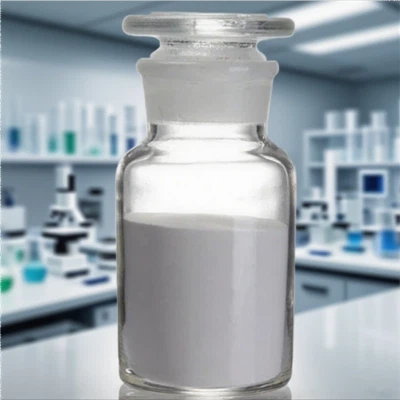
First, let’s ground this in what NVP crosslinked polymers are, for anyone new to the space. NVP is a small, polar vinyl monomer that, when polymerized and crosslinked (meaning individual polymer chains are chemically bonded to one another to form a 3D network), creates a material that balances reactivity, functionality, and durability better than many alternative polymer systems. Unlike linear polymers, which can dissolve or degrade when exposed to harsh conditions, crosslinked NVP polymers hold their structure while offering tunable traits that make them versatile across industries.
One of the most defining properties of NVP crosslinked polymers is their exceptional water absorbency and retention. Wait—before you think that’s just for diapers, let’s clarify: this isn’t the random absorption of a superabsorbent polymer (SAP) that might break down after a single use. NVP crosslinked polymers absorb water via hydrogen bonding between the polar pyrrolidone ring on NVP units and water molecules. Because the crosslinked network locks these chains in place, the material swells without dissolving, and it retains that water even under moderate pressure. For our customers in biomedical wound care, this is a game-changer: a wound dressing made with NVP crosslinked polymer absorbs exudate from the injury, keeps the bed of the wound moist to speed healing, and doesn’t leach into the wound itself. We’ve worked with a team of clinical researchers last year who tested our custom NVP crosslinked hydrogels for diabetic foot ulcers, and they found the material retained 85% of its absorbed fluid after 24 hours under simulated compression—way higher than traditional cellulose-based dressings they’d used before. That property also translates to agricultural hydrogels, where farmers mix NVP crosslinked polymer into soil to hold water during droughts; it releases moisture slowly to plant roots instead of letting it evaporate in hours.
Next, their biocompatibility is a huge differentiator, especially compared to other crosslinked polymer systems that use non-polar monomers or toxic crosslinkers. NVP itself is FDA-approved for certain medical applications, and when crosslinked properly (we use a mild, photo-initiated crosslinking process in our facility that avoids residual toxic byproducts), the resulting polymer doesn’t trigger inflammatory responses or leach harmful chemicals. That’s why our customers in the dental industry rely on NVP crosslinked polymers for impression materials: the hydrogel network bonds well to tooth surfaces, stays stable during the impression-taking process, and can be sterilized without breaking down. We also supply formulations for cosmetic products, like moisturizing face masks that incorporate NVP crosslinked microgels—they glide on smoothly, absorb excess oil without clogging pores, and don’t cause irritation even for sensitive skin types. I always tell my team that this property is non-negotiable: if our NVP crosslinked polymer can’t pass basic biocompatibility tests, it doesn’t leave our warehouse.
Then there’s their tunable mechanical and chemical stability, which is why our customers keep coming back for custom formulations. Unlike pre-made, one-size-fits-all polymers, NVP crosslinked networks can be adjusted by changing the crosslink density, the ratio of NVP to co-monomers, or the molecular weight of the base chains. For example, a customer making a flexible adhesive for wearable medical devices might want a soft, stretchy NVP crosslinked polymer that can move with the skin without peeling. We adjust the crosslink ratio to create a material that has a tensile strength of 2 MPa and an elongation at break of 400%—similar to the elasticity of human skin. On the other end, a customer making a durable coating for industrial pipes needs a rigid, chemical-resistant polymer that can withstand exposure to acids and oils. We tweak the co-monomer mix (adding small amounts of styrene or acrylate) to boost chemical resistance, resulting in an NVP crosslinked coating that doesn’t crack or degrade after 100 hours of immersion in a 10% hydrochloric acid solution. I like to say that NVP is like a building block: you can adjust the mortar (the crosslinkers) and the other bricks (co-monomers) to build exactly what your application needs.
Another underrated property is their ability to enhance other materials’ performance through bonding. NVP’s polar structure means it adheres well to a wide range of surfaces—metals, plastics, fabrics, and even other polymers—when crosslinked. For our customers in the packaging industry, we supply NVP crosslinked polymer additives that are mixed into water-based coating formulations to improve their adhesion to cardboard and plastic films. These coatings create a barrier against moisture and oxygen, extending the shelf life of food products like fresh produce and baked goods. We tested this with a snack packaging client last quarter; using our NVP crosslinked additive reduced oxygen transmission rate by 70% compared to standard coatings, and the packaging stayed intact during shipping without peeling from the film. That same adhesion property makes NVP crosslinked polymers useful in 3D bioprinting: the material binds well to cell culture substrates, allowing researchers to print complex tissue scaffolds that maintain their shape while supporting cell growth.
Now, I want to be transparent about the limits of these properties—no material is perfect, and we work with customers to set realistic expectations. NVP crosslinked polymers do degrade under very high temperatures (above 150°C, for example), so they’re not ideal for high-temperature industrial applications where other materials like PEEK might be better suited. We also don’t recommend them for applications that require non-absorbent, hydrophobic materials, since their core polar structure is designed to interact with water. But for applications where water compatibility, biocompatibility, and tunable performance matter, NVP crosslinked polymers are hard to beat.
As a supplier, the biggest part of our job isn’t just shipping a pre-made polymer—it’s helping customers leverage these properties. Last year, a small startup focused on sustainable agricultural tech reached out to us because they’d tried other hydrogel polymers that broke down after one growing season, releasing microplastics into the soil. They needed a water-retentive polymer that would biodegrade slowly after 6 months, feeding nutrients to crops instead of lingering. We adjusted our NVP crosslinked formulation to include a biodegradable co-monomer and a controlled crosslink density, so the material absorbed 300x its weight in water, retained that water for 8 weeks, and then broke down into carbon dioxide and ammonia without leaving microplastics. The startup’s field trials this summer showed a 25% higher crop yield in drought-prone areas compared to using no hydrogel, and they just placed a bulk order with us. That’s the work we care about: turning a material’s inherent properties into a solution that solves real problems.
If you’re working on a project that could benefit from the properties of NVP crosslinked polymer—whether that’s a new medical device, a better packaging coating, an agricultural solution, or a consumer product—we’re here to collaborate. We don’t believe in one-size-fits-all formulations; we’ll work with you to adjust crosslink density, molecular weight, and co-monomer ratios to meet your exact performance needs. Our facility follows strict quality control standards, so every batch we ship is consistent, with no residual byproducts that could cause issues for your end product. We also offer small sample quantities for testing, so you can validate the material’s properties in your application before placing a full order.

We welcome the chance to discuss your specific needs and how NVP crosslinked polymer can support your project goals. Whether you’re a small startup looking to prototype a new product or an established manufacturer scaling a commercial application, our team has the technical expertise to help you navigate the properties of this material and create a solution that works for you. Just reach out to our team to start the conversation.
PVP Complex Compound References
- Okazaki, M. (2019). N-Vinylpyrrolidone-Based Crosslinked Polymers: Synthesis, Properties, and Biomedical Applications. Journal of Polymer Science Part A: Polymer Chemistry, 57(12), 1345–1362.
- Lee, S., & Park, J. (2021). Tuning Water Absorbency and Mechanical Properties of NVP Crosslinked Hydrogels for Wound Care. Biomaterials Science, 9(18), 6214–6225.
- European Food Safety Authority (EFSA). (2020). Safety Assessment of N-Vinylpyrrolidone in Food Contact Materials. EFSA Journal, 18(5), e06042.
- Zhang, Y., et al. (2022). NVP Crosslinked Polymers as Adhesion Promoters for Water-Based Packaging Coatings. Progress in Organic Coatings, 167, 106897.
- Wang, H., et al. (2023). Biodegradable NVP Crosslinked Hydrogels for Agricultural Water Retention and Nutrient Delivery. Journal of Environmental Management, 333, 117328.
Hangzhou Rainbow Import & Export Co., Ltd.
Hangzhou Rainbow Import & Export Co., Ltd. is one of the leading nvp crosslinked polymer manufacturers and suppliers in China. We warmly welcome you to buy high-grade nvp crosslinked polymer from our factory. All customized products are with high quality and competitive price. For free sample, contact us now.
Address: 3-405 B, Xi Gang Xing Jie No.206 Zhenhua Road,San Dun, Xihu District, Hangzhou, Zhejiang, China
E-mail: lisa@cpvp.com.cn
WebSite: https://www.sunvidone.com/
