Let’s cut to the chase: if you’ve ever spent time around engine bays, conveyor systems, or heavy-duty manufacturing lines, you’ve probably heard someone mention V-belts or multi-ribbed belts—maybe even both. A few years back, when I was just getting my feet wet running this multi-ribbed belt supply business, I made a mistake I still think about: I recommended a standard V-belt for a client’s HVAC system, and they called me a week later, fuming that it snapped mid-shift and shut down their entire office building’s climate control for 12 hours. That client is still one of our biggest repeat customers, but that mistake taught me the core truth no blog post or supplier manual ever puts this plainly: choosing the right belt isn’t just about part numbers—it’s about understanding the actual, tangible differences between these two workhorses. Today, I’m breaking that down for anyone who’s ever stared at a pile of belt inventory and wondered which one they actually need. Multi Ribbed Belt
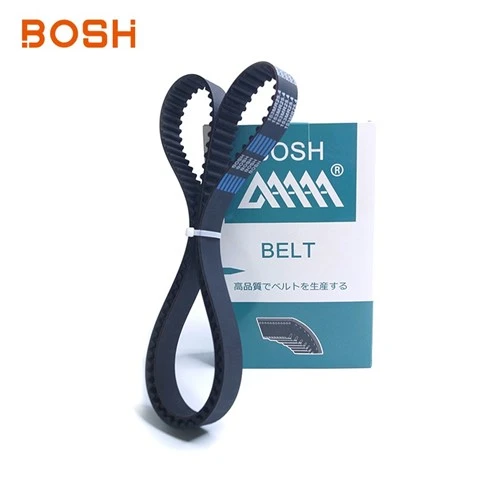
First, let’s talk about what each of these belts is, at their most basic, because that’s where all the differences start. A traditional V-belt is that single, wedge-shaped belt you’ve probably seen on old lawnmowers, classic car engine alternators, or small workshop tools. Its name comes from the V-shaped cross-section that fits into a matching V-groove on pulleys, right? The wedge shape is intentional—it generates friction when it’s tucked into the pulley groove, and that friction is what transfers torque from the engine or motor to whatever it’s powering. I still keep an old V-belt in my office drawer from that first wrong recommendation, just to remind myself how straightforward that design is: one solid strip of rubber, reinforced with a single layer of cords, no extra frills.
Multi-ribbed belts (sometimes called serpentine belts, though technically serpentine is a type of multi-ribbed, but we’ll get to that) are the alternative—and they look way different. Instead of one wedge, they have multiple parallel, thin ribbed grooves along their inner surface. Think of a belt that’s been sliced lengthwise into three or four narrow V-belts all fused into one flat, wide strip, with a smooth outer surface. That design is the game-changer, and it’s why so many modern applications are switching to them. When I started supplying multi-ribbed belts exclusively (we stopped carrying most standard V-belts a couple years back after that HVAC incident), I had to learn exactly how those ribs change performance, and how that plays out in real-world use.
Let’s dive into the first big difference: power transfer. V-belts rely on that wedge and deep groove to grip, but that grip creates a problem—especially in high-load applications. The contact point is only the two sides of the V, so to get enough friction, you have to tension the belt really tight. Tight tension means more wear on the belt, more strain on the pulleys, and more energy wasted just fighting that friction. For small, light loads, that works fine—my neighbor’s old 1998 Ford F-150 still runs on a V-belt for its power steering, no issues. But for anything bigger? Multi-ribbed belts are way more efficient. All those tiny ribs spread the contact surface across the entire inner width of the belt, so you don’t need nearly as much tension to get the same torque. That cuts down on friction loss—studies I’ve cited to clients show multi-ribbed belts are 3-5% more efficient than V-belts, which might not sound like much until you’re running a 100-horsepower conveyor 24/7—suddenly you’re saving thousands a year on electricity.
Load capacity is another make-or-break difference, and this is where I’ve seen so many clients get tripped up. Single V-belts max out at around 20-30 horsepower for most standard sizes, and if you need more than that, you have to stack two or three V-belts side by side on matching pulleys. Stacked V-belts mean more tension, more pulley strain, and more maintenance—you have to check each belt for wear separately, and if one snaps, the whole stack fails. Multi-ribbed belts, though, get their power from combining those multiple ribs into one unit. A standard 6-rib multi-ribbed belt can easily handle 50-70 horsepower, and heavy-duty industrial multi-ribbed belts go way higher, up to hundreds of horsepower for mining or construction equipment. They distribute that load evenly across all the ribs, so even if one rib has a tiny flaw, the others pick up the slack—no catastrophic failure. That’s been a huge selling point for us with manufacturing clients: one of our automotive parts assembly clients switched from stacked V-belts to our multi-ribbed belts three years ago, and they’ve cut unplanned downtime from belt failures by 80%. That’s not a sales pitch—that’s numbers they sent me last quarter, straight from their maintenance logs.
Next up: flexibility and space. V-belts are thick, rigid, because that single wedge has to hold up to tension and load. That means they need large, wide pulleys to wrap around—smaller pulleys would bend the belt too much, cracking the reinforcement cords. If you’re working with a tight, compact engine bay or a conveyor system that has to fit in a small footprint, that’s a problem. Multi-ribbed belts? Those thin, separate ribs make them way more flexible. They can wrap around much smaller pulleys without any wear or risk of snapping, which is why almost every modern car uses a serpentine multi-ribbed belt for the alternator, AC, and power steering—they fit into the tiny engine bays of 2010+ vehicles, something a V-belt could never do. We supply multi-ribbed belts for small agricultural equipment too—compact tractors that have to fit through narrow rows, so their drive systems can’t take up extra space like old V-belt systems did. For any application where space is tight, multi-ribbed is the obvious choice.
Now, let’s talk about maintenance and longevity, because that’s what keeps clients coming back. V-belts, especially stacked ones, need constant attention. Because they run tight, they stretch over time, and you have to adjust the tension every 6-12 months, otherwise they slip or snap. Stacked V-belts also wear unevenly—each belt rubs against the others, so one might wear out in 18 months while the others are fine, and you have to replace all of them to keep the system balanced. Multi-ribbed belts? They stretch much less, because the load is spread across all those ribs, so tension adjustments are only needed every 2-3 years. They also wear evenly—no more uneven belt wear, because every rib is doing the same amount of work. And while a single rib can get damaged (say, a chunk of rubber tears off), that doesn’t mean you have to replace the whole belt. Many of our clients just cut out the damaged section and splice the belt back together, which saves a ton of money compared to replacing a set of stacked V-belts. I’ve had a logging client tell me they’ve run the same multi-ribbed belt on their log loader for 4 years with only one splice, and that’s a belt that’s running 16 hours a day in dirt and rain—way harsher than any office HVAC system.
Wait, but that’s not to say V-belts are useless. I’m not here to bash V-belts—they still have a place. For small, low-load, infrequently used systems, like a backyard lawnmower or a portable generator that only runs during storms, a standard V-belt is cheap and easy to replace. You can grab a new V-belt at any auto parts store for $10, whereas a multi-ribbed belt for a specialty industrial system might be a bit more expensive upfront. But here’s the catch: that cheap V-belt will cost you more in the long run if you’re running it regularly. If you’re using a system 8 hours a day, every day, the multi-ribbed belt’s lower maintenance, better efficiency, and longer lifespan will save you way more than the extra upfront cost. That’s the equation I walk through with every client who’s unsure, and 9 times out of 10, they end up going with multi-ribbed for their main systems.
I want to be transparent here, too—when I first started this multi-ribbed belt supply business, I thought all multi-ribbed belts were the same. Wrong. There are different grades: light-duty for car accessories, medium-duty for HVAC and conveyor systems, heavy-duty for construction and mining. I’ve had clients buy cheap imported multi-ribbed belts online that snapped in a month, because they used low-grade rubber and weak reinforcement cords. That’s why we test every batch of belts we sell—we run them through load tests for 100+ hours to make sure they hold up, because I don’t want to relive that 2018 HVAC incident. The best multi-ribbed belts use high-grade neoprene or EPDM rubber, with reinforcement cords made of aramid fiber (stronger than steel) for heavy loads. V-belts, by contrast, are often made of natural rubber, which is fine for light loads but breaks down faster in extreme temperatures.
Let’s wrap this up with a real-world example that drives this all home. Last year, a local food processing plant came to us because their V-belt system for their bottle conveyor was breaking every 3 months. The belts were stacked, so they were spending $500 a month on replacement belts, plus 2 hours of downtime every time one broke. We swapped their stacked V-belts for our medium-duty multi-ribbed belts, and now they only buy replacement belts once a year, and downtime for belt issues is zero. They saved over $5,000 in the first 6 months alone. That’s not a sales story—that’s the difference between a V-belt and a multi-ribbed belt in action.
If you’re still wondering which one is right for your application, here’s a quick cheat sheet to keep in mind: If your system is low-load, small, and rarely used? Stick with a V-belt. If it’s high-load, runs regularly, needs to fit in a tight space, or you want to cut down on maintenance and energy costs? A multi-ribbed belt is the way to go. And if you’re in that middle ground, where you’re not sure, just reach out—we’ll walk through your system with you, no hard sell, no pressure. We’ve been supplying multi-ribbed belts for over a decade, and we’ve worked with everyone from small auto repair shops to large manufacturing facilities, so we know what works.
Don’t wait until a belt snaps and shuts down your operations—do the research now, and pick the belt that’s built for your needs. We’re here to help you find the right multi-ribbed belt, answer any questions you have, and make sure you have the right parts to keep your system running smoothly.
Timing Belt References
- Rubber Manufacturers Association. (2021). “Power Transmission Belts: Types, Performance, and Application Guidelines.” RMA Technical Bulletin.
- Society of Automotive Engineers. (2019). “Efficiency Comparison of V-Belt and Serpentine Multi-Ribbed Belt Systems in Light-Duty Vehicles.” SAE International Journal of Commercial Vehicles.
- Industrial Belt Association. (2022). “Multi-Ribbed Belt Load Capacity and Longevity: Field Test Data.” IBA Maintenance Report.
Xingtai Boshuo Auto Technology Co., Ltd.
Xingtai Boshuo Auto Technology Co., Ltd. is one of the most professional multi ribbed belt manufacturers and suppliers in China, featured by quality products and low price. Please rest assured to wholesale bulk customized multi ribbed belt made in China here from our factory. Welcome to contact us for pricelist and free sample.
Address: No. 58 Quannan East Street, Xiangdu District, Xingtai City, Hebei Province
E-mail: sherry1@bs-belt.com
WebSite: https://www.bsbelts.com/
