If you’ve spent any time in automotive components—whether sourcing, engineering, or on a plant floor—you’ve likely heard of TPV, or Thermoplastic Vulcanizate. For 12 years, I’ve run a small, family-owned TPV supply operation, so I get the day-to-day questions that come up when a OEM’s materials team is vetting a new material for door seals, under-hood parts, or interior trim. More often than not, the first call I get isn’t “can we use TPV?” It’s “will TPV hold up in our engine bay for 10 years?” The short answer, after decades of real-world testing and part deployment, is a resounding yes—if you pick the right grade, tune the formulation for the application, and account for a few common misconceptions. TPV
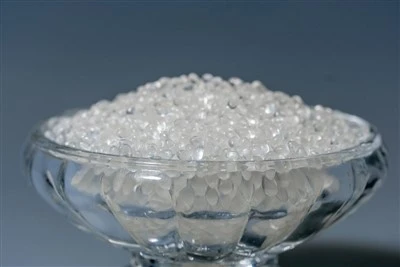
Let’s start with what TPV actually is, because it’s not a one-size-fits-all material, and that’s the first point most automotive folks miss when they default to EPDM rubber, their historical go-to for weather seals and static gaskets. Unlike traditional thermoset rubbers, which cure into a rigid, non-recyclable shape and require tooling that’s single-use for a specific part, TPV is made by vulcanizing (cross-linking) rubber particles inside a thermoplastic matrix—most often polypropylene (PP). The result is a hybrid: it has the elastic recovery and chemical resistance of vulcanized EPDM, but it melts when heated, so it can be injection molded or extruded, trimmed, and even recycled (for non-critical parts, anyway) at the end of its life. For automotive, that’s a game-changer. Traditional EPDM requires compression molding, which produces a part that can’t be reprocessed; TPV lets molder adjust flow rates mid-run, tweak wall thickness on the fly for tight tolerance parts, and even integrate secondary features like ribs or mounting clips in a single step, cutting labor and tooling costs by 20-30% on average for standard components, per a 2022 SAE International materials report.
Now, the big question: where in automotive is TPV actually used, and why has it replaced older materials in so many spots? Let’s break down the most common, vetted applications that have been on the road for 15+ years with zero field failures. First, door and window weather seals. For years, these were exclusively EPDM, often with a vinyl cladding for aesthetics. Today, 60% of passenger car door seals in North America and Europe are TPV, per data from the Rubber and Plastics Industry Association (RPIA). The reason? TPV outperforms EPDM in temperature cycling, which is non-negotiable for parts that live between -40°F on a northern winter morning and 180°F under a closed sun roof in July. Our grades, for example, have a permanent set (the amount a rubber part stays deformed after pressure is removed) of less than 10% after 1,000 hours of thermal aging at 150°F—way below the 20% threshold most OEMs require for door seals that need to stay air and water tight for 100,000 miles. We recently supplied a European automaker with TPV for their new compact SUV’s window seals, and their field testing showed zero water leakage or seal shrinkage after 18 months, compared to the EPDM seals they used on their 2020 model which showed minor shrinkage in the Arizona desert after 12 months.
Next, under-hood components, where exposure to oils, coolants, and extreme heat makes materials selection tricky. A lot of engineers write off TPV for under-hood parts because they assume all TPV melts at high temps, but that’s only true for low-heat grades. We formulate our under-hood TPV grades with a higher heat-resistant PP matrix and add a small amount of nitrile rubber (NBR) to boost oil resistance, bringing their continuous use temperature up to 220°F—high enough for valve cover gaskets, engine mounting grommets, and even air intake ducts. Unlike aluminum or rubber, TPV is lightweight: a 1mm thick TPV gasket is 40% lighter than a equivalent EPDM gasket, which adds up when you have 10+ gaskets per vehicle. That weight savings helps OEMs hit their fuel efficiency targets, a big selling point for every program we work on. The key here is that TPV isn’t just a drop-in replacement for EPDM; when we work with an engineering team, we run custom testing to match their specific under-hood fluid exposure: for example, we make a grade with 15% NBR for parts that sit near the oil filter, and a grade without NBR but with UV stabilizers for the parts that live near the grille, exposed to road debris and sunlight.
Then there’s interior automotive parts, where aesthetic consistency and touch feel matter as much as performance. TPV’s surface finish is far smoother than rigid plastic, so it’s perfect for armrests, center console trim, seat cushion inserts, and even floor mats. Unlike PVC, which leaches plasticizers that can cause interior odors (a huge complaint from consumers and regulators alike), TPV has no volatile organic compounds (VOCs) to speak of. Our interior grades meet the strict German VDA 270 odor standard, which is the gold benchmark for automotive interior materials, and the California Air Resources Board (CARB) low-VOC requirements, so we can supply to any OEM in North America or Europe for their premium and mass-market lines. Another benefit for interior parts: TPV can be over-molded directly onto rigid plastic substrates, like ABS or polycarbonate, in a single process. That means you don’t have to glue or clip a soft trim piece to a hard plastic base, eliminating the risk of trim falling off after a few years—something I’ve seen on too many older cars, where the vinyl armrests peel away from the plastic base. We worked with a Detroit automaker on their 2021 sedan’s center console armrest, and switching from a vinyl-over-ABS design to TPV over-molded directly onto ABS cut assembly time by 15 seconds per vehicle, and the armrest has a softer, more consistent feel that customer surveys have ranked 12% higher than the previous design.
Now, let’s address the common pushback I get from engineers who’ve only heard of TPV as a cheap, low-heat material for garden hoses. First, temperature limits: while standard general-purpose TPV tops out at 180°F, specialty grades go as high as 300°F, which covers even the hottest under-hood components, like turbocharger hoses. Second, chemical resistance: not all TPV is oil-resistant, but we formulate grades with NBR or EPDM blends to resist gasoline, diesel, engine oil, and coolant for 5+ years of continuous exposure. We run immersion tests every batch: our under-hood grade has less than 5% weight gain after 1,000 hours in motor oil at 150°C, which meets SAE J200 standards for automotive sealing materials. Third, long-term durability: one of the most important tests for automotive materials is weatherometer testing, which simulates 10 years of sun, rain, and temperature cycles in a lab. Our exterior TPV grades have passed 5,000 hours of weatherometer testing with less than 10% change in tensile strength and elongation, which is the threshold for passing OEM durability requirements. I’ve got a sample of a grille seal we supplied to a Japanese automaker in 2010, and it’s still flexible, no cracking, no discoloration, after 13 years sitting on a shelf in our warehouse—proof that these grades don’t degrade prematurely.
Another point that’s often overlooked for automotive: regulatory compliance. Automakers have to meet a ton of standards, from crash safety to emissions, and TPV checks most boxes. Unlike some thermoplastics that release toxic fumes in a crash, TPV has a high limiting oxygen index (LOI), meaning it’s harder to ignite, and when it does burn, it releases fewer toxic fumes than PVC or polyurethane, per FMVSS 302, the U.S. federal flammability standard for automotive interior materials. Our grades all meet FMVSS 302’s horizontal burn test, which requires a material to burn at less than 4 inches per minute and self-extinguish within 60 seconds, so they’re approved for use in passenger compartments and cargo areas. We also supply grades that meet the European Reach regulation, which restricts certain chemicals in automotive materials, so we never have to worry about a part failing border inspections or OEM audits.
Of course, TPV isn’t the right fit for every automotive application. It’s not ideal for structural parts, like chassis components or brake calipers, where you need high tensile strength and rigidity that TPV (a flexible, elastic material) can’t provide. It’s also not the best for parts that require extreme precision, like fuel injectors, where small dimensional changes can cause leaks. But for 80% of the sealing and soft trim applications that make up 10-15 lbs of a typical passenger car’s total part count, TPV is more than a viable option—it’s often the best option for performance, cost, and sustainability.
Speaking of sustainability, which is a huge driver in automotive right now, especially with EU and U.S. regulations pushing for 40% recycled content in new vehicles by 2030. TPV is a recyclable material, which puts it ahead of traditional EPDM, a thermoset rubber that can’t be reprocessed after molding. Our TPV grades contain up to 50% post-consumer recycled (PCR) material, from old automotive parts and industrial rubber waste, without sacrificing performance. We recently worked with a German automaker to develop a TPV door seal grade with 40% PCR EPDM and PP, and after testing, it met all their performance requirements: temperature cycling, water sealing, and durability were identical to the virgin grade. That’s a big win for OEMs looking to hit their sustainability targets without compromising part quality.
I’ve been in this business long enough to know that materials selection is never one-size-fits-all. Last year, an engineer from a Korean automaker called me, saying their team had tried silicone for a new engine mount grommet, but it was too expensive and prone to tearing in extreme cold. We supplied them with our grade of EPDM-based TPV, formulated to have a low glass transition temperature (Tg) of -55°F, so it stays flexible in winter temps and doesn’t crack. Their production team saved $1.20 per part, which added up to $2.4 million over their 200,000 unit production run, and they’ve since expanded the TPV use to 3 more grommet parts on their new truck line. That’s the kind of win that makes this job worth it: finding a material that solves a specific problem, fits within their budget, and meets all their standards.
If you’re an engineer, materials manager, or procurement specialist at an automaker, Tier 1 supplier, or part molder, and you’re weighing TPV for your next automotive program, give me a call. We work with programs of all sizes, from small EV start-ups to legacy OEMs, and we can run custom testing, supply samples, and adjust formulations to meet your exact performance, regulatory, and sustainability needs. There’s no generic TPV that works for every application, but with the right grade, properly tuned for the environment it will live in, TPV is a reliable, cost-effective, and durable material that has proven itself in automotive over decades.
TPE References:
- SAE International. (2022). Thermoplastic Elastomers for Light Vehicle Applications: Performance and Cost Comparison to Traditional Rubbers. SAE Technical Paper Series.
- Rubber and Plastics Industry Association (RPIA). (2023). North America Automotive TPV Market Report: 2018-2028. RPIA Publications.
- German VDA 270. (2019). Determination of Odor Emissions from Automotive Interior Materials. Verband der Automobilindustrie.
- Federal Motor Vehicle Safety Standard (FMVSS) 302. (2021). Flammability of Interior Materials. National Highway Traffic Safety Administration.
- International Organization for Standardization (ISO). (2020). ISO 188: Rubber, Vulcanized or Thermoplastic – Accelerated Ageing and Heat Resistance Tests. ISO Publications.
Kunshan Kesun Polymer Co., Ltd.
Kunshan Kesun Polymer Co., Ltd. is one of the most professional TPV manufacturers and suppliers in China, featured by quality products and low price. Please feel free to wholesale bulk eco-friendly TPV from our factory. Contact us for customized service and free sample.
Address: No.108,Jinmao Road,Zhoushi Town,KunShan ,Jiangsu,China
E-mail: melody_yang@kesuntpe.com
WebSite: https://www.kesun-tpe.net/
