If you’ve ever stepped foot inside a modern data center—even as a visitor, clutching a visitor badge and following strict aisle rules—you’ve probably glanced at that elevated, grated grid covering the floor and wondered why it exists. For 15 years, I’ve been part of a company that designs, manufactures, and installs raised access floors for data centers, so I’ve fielded this question a hundred times: “Is that floor just for cable management, or does it actually help with cooling?” The short answer is yes, and no—it’s both, but its greatest impact is on cooling efficiency, a make-or-break factor for data centers that are the backbone of every app, website, and cloud service you use. Let’s break down how a raised floor shapes cooling performance, why it’s not a one-size-fits-all solution, and what I wish more data center operators understood about getting the most out of theirs. Raised Floor Data Center
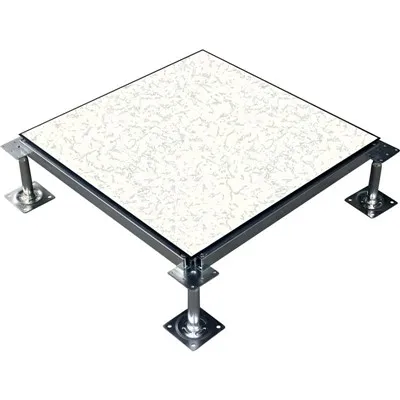
First, let’s set the baseline. Before raised floors, data centers used overhead cooling systems, with vents in the ceiling blowing cold air straight onto server racks. But here’s the problem: servers suck in air from the front (cold air) and blow it out the back (hot air), creating what’s called a hot aisle/cold aisle containment model when done right. Without a barrier between the two air streams, hot air from the back of one rack mixes with the cold air heading to the front of the next, forcing cooling systems to work harder than they need to. That’s called “airside leakage,” and it’s one of the biggest culprits behind low cooling efficiency. A raised floor changes this dynamic entirely by creating a plenum—a sealed, empty space below the floor that acts as a dedicated cold air channel.
Here’s how it works: CRAC (Computer Room Air Conditioning) or CRAH (Computer Room Air Handling) units blow cold air up into the under-floor plenum. The plenum is divided into sections, each corresponding to a cold aisle, with perforated floor tiles in those aisles that let cold air rise directly into the cold aisles, right at the front of the server racks. The hot air exits the back of the racks, is either contained in a separate hot aisle plenum for recirculation or exhausted directly outside, and there’s almost no mixing with cold air. This is the closed-loop cooling system that most modern data centers rely on, and the raised floor is the foundation that makes it possible.
But efficiency isn’t just about directing air—it’s about how much air you waste. A poorly designed raised floor can be worse than no raised floor at all, and I’ve seen it firsthand. Early in my career, I worked on a project for a mid-sized e-commerce data center operator that had cut corners on their raised floor installation. They used standard solid tiles in non-critical areas, and the perimeter of the plenum had gaps between tiles and the wall that weren’t sealed. What happened? Most of the cold air being pumped into the plenum leaked out through those gaps, instead of going through the perforated tiles into the cold aisles. Their CRAC units were running at 100% capacity 18 hours a day, and their PUE (Power Usage Effectiveness)—the standard metric for data center efficiency, with lower being better—was a disappointing 1.8. For context, a top-tier data center has a PUE of 1.1 or lower, meaning only 10% of total power is wasted on non-computing tasks like cooling.
We came in to audit their raised floor, and we found that 32% of their cold air was leaking. That’s a huge number—enough to require two extra CRAC units just to make up for the wasted air. The fix was simple, once we pointed it out: we replaced the un sealed perimeter gaps with weather-stripped trim, added dedicated blank tiles to areas where there were no racks, and adjusted the size of the perforated tiles in the cold aisles to match the server airflow requirements. Within three months, their PUE dropped to 1.3, cutting their annual cooling costs by over $270,000. That’s the kind of impact a properly designed raised floor can have, and it’s why we don’t sell generic floors—we work with operators to tailor every component to their specific cooling needs.
Another factor that comes into play is air flow uniformity. If a cold aisle has too many perforated tiles in one spot and not enough in another, you’ll get “dead zones” where air doesn’t circulate, leading to hot spots on server racks. Modern raised floor systems let you adjust the airflow per tile, either by drilling custom-sized holes, using variable-pitch perforated tiles, or adding dampers that operators can open or close to adjust airflow as needed. For high-density racks—say, racks with 40+ servers that use more power and more cooling—you can use high-airflow tiles that deliver 2 to 3 times more cold air than standard tiles. We installed this solution for a cloud provider that was expanding a data center to house new GPU clusters for AI workloads. Those GPUs draw up to 20kW per rack, vs. the standard 5kW per rack for old servers. With a regular cooling setup, they would have needed to replace three old CRAC units to handle the extra load. Instead, we installed high-airflow raised floor tiles in their new high-density cold aisles, adjusted the plenum pressure to match the higher airflow demands, and cut their cooling upgrade cost by 40%.
But it’s not just about cold air—hot air handling plays a role too, and raised floors work hand-in-hand with containment systems, which are now standard in efficient data centers. Containment can be either hot aisle or cold aisle, both dependent on the raised floor design. Cold aisle containment uses barriers to seal off the cold aisles above the raised floor, so cold air can’t escape into the room, while hot aisle containment seals the hot aisles to direct exhaust air back to CRAC units or outside the facility. In both cases, the raised floor ensures that the cold air delivery is consistent. Without a raised floor, cold aisle containment would require ductwork in the ceiling, which is more expensive and less efficient than the under-floor plenum.
Of course, there are trade-offs. Raised floors add upfront cost—they can run between $50 and $150 per square foot, depending on the load capacity, material, and custom features. For small data centers or edge facilities with only a dozen racks, some operators opt for overhead cooling or even direct liquid cooling, skipping the raised floor. But even edge facilities are starting to adopt raised floors as their server density increases. I also see a lot of operators confused about load ratings. A standard raised floor can hold around 2,000 pounds per square foot, but for heavy equipment like generators or battery banks, you need a reinforced floor rated for 10,000 pounds or more. Underrating the floor is a common mistake that leads to structural issues and airflow gaps, which hurt cooling efficiency.
Another common myth is that raised floors only work with forced-air cooling. That’s not true—we’ve worked with customers that combine under-floor air distribution with indirect evaporative cooling or even liquid cooling for high-density zones. The plenum still serves as a centralized delivery system, which reduces the number of individual cooling units needed, keeping efficiency high. The key is that the plenum is a neutral, sealed space—if it has leaks or uneven pressure, no cooling system can overcome that.
I’ve also seen data centers that use raised floors but neglect maintenance, which kills efficiency over time. Dust buildup on the tiles or in the plenum can block airflow, and damaged tiles or unsealed gaps develop over time as operators move racks or modify the space. We recommend annual audits of the raised floor and plenum to check for leaks, adjust tile airflow, and clean dust buildup. In one project, a data center operator skipped an audit for two years and found that their PUE had jumped from 1.2 to 1.5, just from minor leaks and dust blocking tiles. A single day of inspection and minor adjustments brought it back down to 1.2.
Looking ahead, as data center power consumption grows (the International Energy Agency estimates data centers will use 3% of global electricity by 2030), efficiency will only become more critical. The raised floor of the future isn’t just a static grid of tiles—it’s a smart system with sensors that monitor airflow, pressure, and temperature in the plenum, adjusting dampers and tile airflow in real time to match server needs. Some of our clients are already testing these smart raised floors, and early data shows they can reduce cooling energy use by another 15%.
At the end of the day, the raised floor is much more than a utility for cable management. It’s the backbone of a data center’s cooling system, and how you design, install, and maintain it directly impacts efficiency, operational costs, and even the lifespan of your servers. Wasted airflow leads to wasted energy, which leads to higher bills and unnecessary carbon emissions—something every data center operator is now held accountable for.
If you’re building a new data center or upgrading an existing one to improve cooling efficiency, getting the raised floor right is one of the most impactful decisions you can make. Our team has worked with data centers of all sizes, from small edge facilities to hyperscale cloud campuses, to design custom raised floor solutions that meet specific cooling, load, and budget needs. We don’t do one-size-fits-all, and we don’t cut corners on sealant, material quality, or airflow design.

If you’re ready to improve your data center’s cooling efficiency, we can walk you through an audit of your existing system or help design a new raised floor tailored to your needs. Contact us to start a conversation.
Raised Access Computer Floor References
American Society of Heating, Refrigerating and Air-Conditioning Engineers (ASHRAE). (2022). Thermal Guidelines for Data Processing Environments.
U.S. Department of Energy. (2021). Data Center Energy Efficiency Improvement and Cost Saving Opportunities.
International Energy Agency (IEA). (2023). Data Center and Network Infrastructure Report.
The Uptime Institute. (2020). Raised Floor Design and Best Practices for Data Centers.
Fineco Tech Co., Ltd.
As one of the most professional raised floor data center manufacturers and suppliers in China, we’re featured by quality products and good service. Welcome to wholesale customized raised floor data center made in China here from our factory. If you have any enquiry about cooperation, please feel free to email us.
Address: Wuyue Square, Wujin District, Changzhou, Jiangsu, China
E-mail: info@finecotech.com
WebSite: https://www.finecoglobal.com/
