If you’ve ever worked in manufacturing, process automation, or heavy machinery maintenance, you know industrial connectors are the unsung heroes keeping entire operations running. They’re the unseen links between motors, sensors, control panels, and power supplies, and one of the most critical specs we talk about as an industrial connectors supplier is insulation resistance. I’ve lost count of how many times I’ve had a client come to me panicking because their machine kept tripping, only to find out a faulty connector’s insulation resistance was so low it was causing a short—so let’s break this down, no jargon overload, just real-world context from someone who’s spent 15 years troubleshooting, designing, and supplying these parts. Industrial Connectors
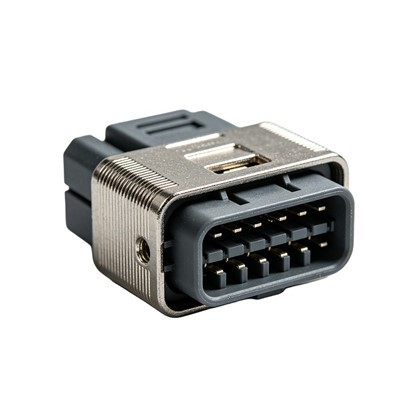
First, let’s define it simply: insulation resistance (IR) is a measure of how well the non-conductive parts of a connector (the plastic housing, internal insulating barriers, or the material between adjacent pins) block electrical current from leaking where it shouldn’t. If that barrier is intact, IR is extremely high—like millions or even billions of ohms. If it’s compromised, current leaks, leading to everything from false sensor readings to full-on equipment failures. But here’s the thing: IR isn’t a one-size-fits-all number. It depends on the application, the environment, and even the age of the connector.
Let’s start with the basics of how we test it in our facility, because that’s where a lot of the confusion comes from. We don’t just guess a connector’s IR rating—we use a megohmmeter (or megger) to apply a known DC voltage (usually 500V or 1000V, depending on the connector’s rated voltage) across the insulating material, then measure the resulting current. The formula is straightforward: IR = V/I (voltage divided by current), so less current means higher resistance, which is better. For most industrial connectors, the minimum acceptable IR is listed in standards like IEC 60512 or UL 1950, two guidelines we follow religiously as a supplier. But here’s a common mistake clients make: they take a connector fresh out of the box, test it at 10,000 megohms, and assume that’s what it will be in three years in a food processing plant with constant steam and cleaning chemicals. IR degrades over time, so we don’t just spec for new parts—we spec for the lifetime of the application.
Now, why does this matter so much in industrial settings? Let’s talk about specific use cases, because I can rattle off numbers all day, but context is everything. Take a pharmaceutical packaging line: those machines run 24/7, and any downtime costs thousands of dollars an hour. The connectors here are exposed to frequent washdowns with harsh detergents. If water seeps into the housing and lowers IR, you might get a short that stops the line mid-packing, ruining expensive product batches. We had a client a few years back who tried to save a few cents on a “generic” connector from a no-name supplier. Their IR dropped from 10,000 megohms new to 100 megohms after six months of washdowns, and their line went down twice in a month. When they switched to our marine-grade, UV-stabilized polycarbonate connectors—we use a modified nylon that resists moisture absorption—their IR stayed above 5,000 megohms for 18 months, and their downtime dropped to zero for connector-related issues. That’s the kind of real-world impact IR has.
Another example: high-voltage motors in mining equipment. These operate in dusty, dirty environments where coal dust and moisture can build up on connector surfaces, creating a conductive path. The IR here has to be even higher—minimum 1,000 megohms at 1000V, according to mining industry standards. If IR drops below that, you risk arc flash, which is a serious safety hazard for line workers. We supply connectors with embedded insulation barriers specifically for these applications—small plastic ridges between pins that prevent dust from bridging the gap. The key here is that we don’t just meet the minimum IR requirement; we design our connectors to maintain that IR even when exposed to harsh contaminants over time.
Wait, let’s get into what actually causes insulation resistance to drop, because that’s what our engineering team works on every day. The biggest culprits are moisture absorption, contamination, thermal aging, and mechanical stress. Moisture is a big one: if the connector’s housing isn’t sealed properly, water can get in and lower the resistance of the insulating material. We test our sealed connectors with IP ratings—IP67, IP69K for washdown environments—to ensure they don’t let water in, which preserves IR. Contamination like oil, dust, or metal shavings is another issue: these can sit on the surface of the connector and create a conductive path between pins, even if the internal insulation is fine. We add non-stick coatings to some of our high-performance connectors to prevent this, making it easier to wipe off contaminants before they affect IR.
Thermal aging is a silent killer, especially in applications where connectors are near heat sources like furnaces or power inverters. The plastic housing can break down over time at high temperatures, becoming more conductive and lowering IR. We spec materials that can withstand continuous temperatures up to 125°C (257°F) for most heavy industrial uses, and even higher for extreme environments. We recently did a test on a set of our high-temperature connectors that had been running near a steel mill furnace for three years—their IR was still at 2,200 megohms, which is well above the required minimum for that application. Compare that to a competitor’s connector that the same client had to replace every 12 months, and you see why material choice is non-negotiable.
Now, a question I get all the time: “What’s a ‘good’ insulation resistance number, anyway?” The short answer is: it depends on the rated voltage of your connector. For low-voltage control circuits (up to 60V), a minimum IR of 10 megohms is often sufficient, but we recommend 100 megohms to account for aging and environment. For medium-voltage applications (60V to 1000V), the minimum jumps to 1,000 megohms, and for high-voltage (above 1000V), it’s 10,000 megohms or more. But here’s a caveat: these are minimums. If you’re in a corrosive environment or high-vibration setting, we always advise going for a higher initial IR, because it will hold up better over time. For example, a connector rated for 600V used in a chemical plant should have an IR of at least 5,000 megohms new, not just the 1,000 megohms minimum.
I also want to address a common misconception: some people think that if a connector is intact and not damaged, its IR will automatically be fine. That’s not true. I’ve seen brand-new connectors out of the box with IR of 50 megohms, which is way too low for a 480V application. Why? Because of poor manufacturing quality—shoddy insulating materials, gaps in the housing molding, or even contaminants trapped in the plastic during production. That’s why as an industrial connectors supplier, we test every batch before it leaves our warehouse. We don’t just check dimensions or pin alignment; we run IR tests on a sample of every production run to make sure it meets our specs. Last quarter, we caught a bad batch of nylon connectors that had absorbed too much moisture during storage (yes, even sealed in plastic bags can absorb moisture if stored too long). We pulled the entire batch before it shipped, saved our client from a headache, and that’s the kind of attention to detail that sets a reliable supplier apart.
Now, how do you test insulation resistance on site, if you’re not sure if your connectors are performing? It’s simple, but you have to do it right. First, turn off all power to the circuit—always safety first. Disconnect the connector, clean the pins and housing to remove any surface contaminants (grease, dust, water). Then, set your megohmmeter to the correct voltage (use 500V for most low to medium voltage applications), and connect the test leads to two adjacent pins (or between a pin and the connector’s metal shell, if you’re testing the housing insulation). Wait 60 seconds for the meter to stabilize—that’s important, because some materials take time to resist current, and a quick reading will be lower than the true IR. If the reading is below the minimum for your application, it’s time to replace the connector. Don’t try to clean it and reuse it—9 times out of 10, the internal insulation is already compromised.
Let’s circle back to why this matters for our clients, because that’s what drives what we do. Industrial connectors are the backbone of modern industry, and a single faulty connector with low IR can bring an entire operation to a halt, costing tens of thousands of dollars in lost production, repair time, and even safety risks. As an industrial connectors supplier, our job isn’t just to sell you a part—it’s to make sure that part works for your specific environment, for the life of your machine. That means spec’ing the right material, testing every batch, and advising you on the best connectors for your application, not just the cheapest ones.
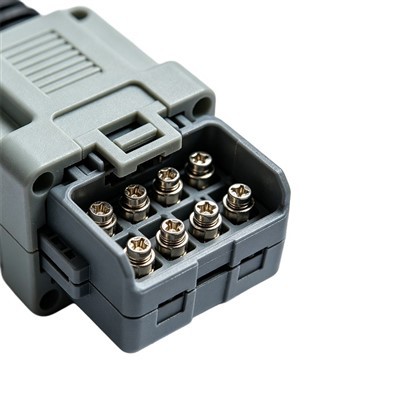
If you’re dealing with frequent connector failures, or you’re not sure if your current connectors have the right insulation resistance for your application, we’d love to help. We work with clients across manufacturing, automation, mining, food processing, and more, and we can help you audit your current setup, test your connectors, and find a solution that reduces downtime and improves safety. Don’t wait for a failure to happen—reach out to our team of experts to discuss your needs today.
3C Accessories References
IEC 60512-1:2017, Connectors for electronic equipment – Tests and measurements – Part 1: General and introductory information
UL 1950:2020, Standard for Safety for Information Technology Equipment
NACE SP0175-2018, Control of Microbial Influenced Corrosion in Industrial Systems, Second Edition
Modelon Precision Industry (Suzhou) Co., Ltd.
With abundant experience, we are one of the most professional industrial connectors manufacturers and suppliers in China. Welcome to buy customized industrial connectors at competitive price from our factory. If you have any enquiry about pricelist, please feel free to email us.
Address: 1st Floor, Building 22, No. 2628 North Gate Road, Kunshan City, Jiangsu Province, P.R.China
E-mail: jessica_huang2025@163.com
WebSite: https://www.modeloncn.com/
